Customer Success is no longer just about managing relationships; it's about driving outcomes. In today's competitive landscape, Customer Success Managers (CSMs) are under increasing pressure to not only retain customers but also to proactively identify expansion opportunities and mitigate churn risks before they materialize. The secret to achieving this lies in data-driven insights, and the key to unlocking those insights is Artificial Intelligence (AI).
While the buzz around AI is undeniable, many CS teams are still in the early stages of adoption. A 2024 report from TSIA revealed that nearly 60% of organizations had not yet invested in AI for customer success [1]. However, this is rapidly changing as companies recognize AI's ability to scale engagement and deliver personalized experiences. For CSMs, this presents a massive opportunity to evolve from reactive problem-solvers to strategic advisors, armed with the power of predictive analytics and intelligent automation.
This guide will explore how AI is transforming the world of customer success, providing CSMs with the tools and insights they need to not only meet but exceed their goals. We'll delve into the data behind AI-powered customer health scoring, churn prediction, and productivity gains, offering a practical roadmap for leveraging AI to drive meaningful business impact.
The End of NPS as We Know It: A New Era of Customer Health Scoring
For years, the Net Promoter Score (NPS) has been the go-to metric for gauging customer satisfaction. However, its limitations are becoming increasingly apparent. NPS is a lagging indicator, reflecting past sentiment rather than predicting future behavior. In 2025, the industry is shifting towards more dynamic and predictive measures of customer health, with a focus on adoption metrics and AI-driven scoring models [1].
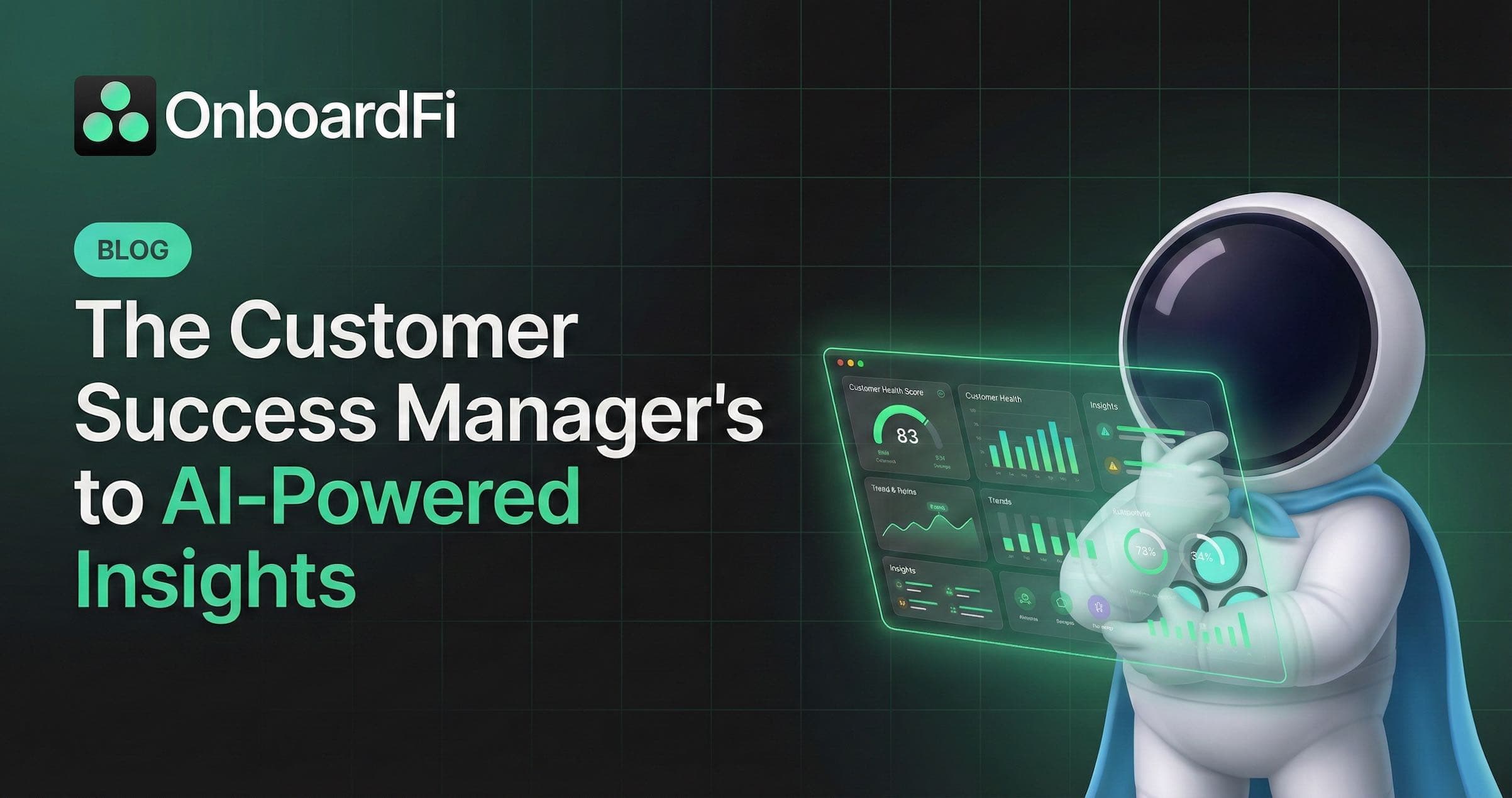
Modern customer health scores are no longer static, rules-based calculations. Instead, they leverage AI to analyze a wide range of data points in real-time, providing a holistic and forward-looking view of customer health. These data points can include:
| Data Source | Description |
|---|---|
| Product Usage | How deeply and frequently customers are engaging with your product's key features. |
| Relationship Quality | The sentiment and frequency of interactions with your team, including support tickets, emails, and calls. |
| Value Realization | The extent to which customers are achieving their desired outcomes and realizing a return on their investment. |
By analyzing these factors, AI-powered health scores can identify subtle changes in customer behavior that may indicate a risk of churn or an opportunity for expansion. This allows CSMs to intervene proactively, armed with the context they need to have meaningful, value-driven conversations.
Predicting the Future: AI-Powered Churn Prediction
Churn is the silent killer of SaaS businesses. While some churn is inevitable, the ability to predict which customers are at risk of leaving can be a game-changer. This is where AI-powered churn prediction models come into play.
These models use machine learning algorithms to analyze historical customer data and identify the patterns that precede churn. The accuracy of these models is impressive, with some studies reporting accuracy rates of over 90% [2, 3]. One company, Hydrant, even saw a 260% higher conversion rate and a 310% increase in revenue per customer by using predictive AI to identify and engage likely churners [4].
However, it's important to remember that accuracy isn't the only metric that matters. As one Reforge article points out, if your enterprise churn rate is under 25%, a model that simply predicts "no one will churn" will be 75% accurate [5]. Therefore, it's crucial to also focus on precision and recall to ensure that you're not only identifying at-risk customers but also minimizing false positives.
Supercharging CSM Productivity: More Time for What Matters
One of the most significant benefits of AI in customer success is its ability to automate a wide range of manual and time-consuming tasks, freeing up CSMs to focus on what they do best: building relationships and driving value for customers. A 2024 Gainsight report found that 73% of CS professionals ranked increased CSM productivity as the top benefit of AI [6].
AI can automate tasks such as:
- Data analysis and reporting: 45% of CS professionals ranked this as the number-one activity to automate with AI [6].
- Meeting summaries and action items: Tools like Gong and Chorus.ai use AI to transcribe and summarize customer calls, automatically identifying action items and follow-ups.
- Personalized outreach: AI can help CSMs craft personalized emails and messages at scale, ensuring that every customer feels seen and heard.
By offloading these tasks to AI, CSMs can spend more time on strategic activities, such as conducting business reviews, identifying expansion opportunities, and building deeper relationships with customers. This not only leads to better outcomes for customers but also a more fulfilling and impactful role for CSMs.
The Human-First Approach to AI in Customer Success
It's important to remember that AI is not a replacement for human connection. In fact, when implemented thoughtfully, AI can actually enhance the human element of customer success. As Denise Stokowski, SVP of Product Management at Gainsight, puts it, "Despite its technological roots, AI is a path to more human-centric interactions" [6].
The most successful CS teams will be those that embrace a "Human-First AI" approach, using AI to augment the skills and expertise of their CSMs, not to replace them. By leveraging AI-powered insights, CSMs can have more informed, proactive, and value-driven conversations with their customers, ultimately leading to stronger relationships and better business outcomes.
At OnboardFi, we believe that AI is the key to unlocking the full potential of customer success. Our Customer Oracle is an intelligent AI assistant that provides CSMs with real-time insights into customer health, progress, and risks, empowering them to be the strategic advisors their customers need. By combining the power of AI with the empathy and expertise of our CSMs, we're helping our customers achieve their goals and build lasting relationships.
References
[1] The State of Customer Success 2025 | TSIA
[3] Customer Churn Prediction Using Machine Learning in 2025 | Eliya
[4] We Used AI to Predict Customer Churn | Pecan.ai
[5] 5 Data Science Models for Predicting Enterprise Churn | Reforge
[6] Announcing the 2024 State of AI in Customer Success Report | Gainsight